
Every Golden Retriever is, genetically speaking, the same color. That sounds strange given how different a pale English Cream looks next to a deep mahogany field-bred Golden, but it’s true, and understanding why is the key to making sense of golden retriever coat colors once and for all.
This guide breaks down the coat types you’ll actually encounter, the official AKC color categories, the genetics behind the shade variation, and how a puppy’s coat can change before it settles into its adult color.
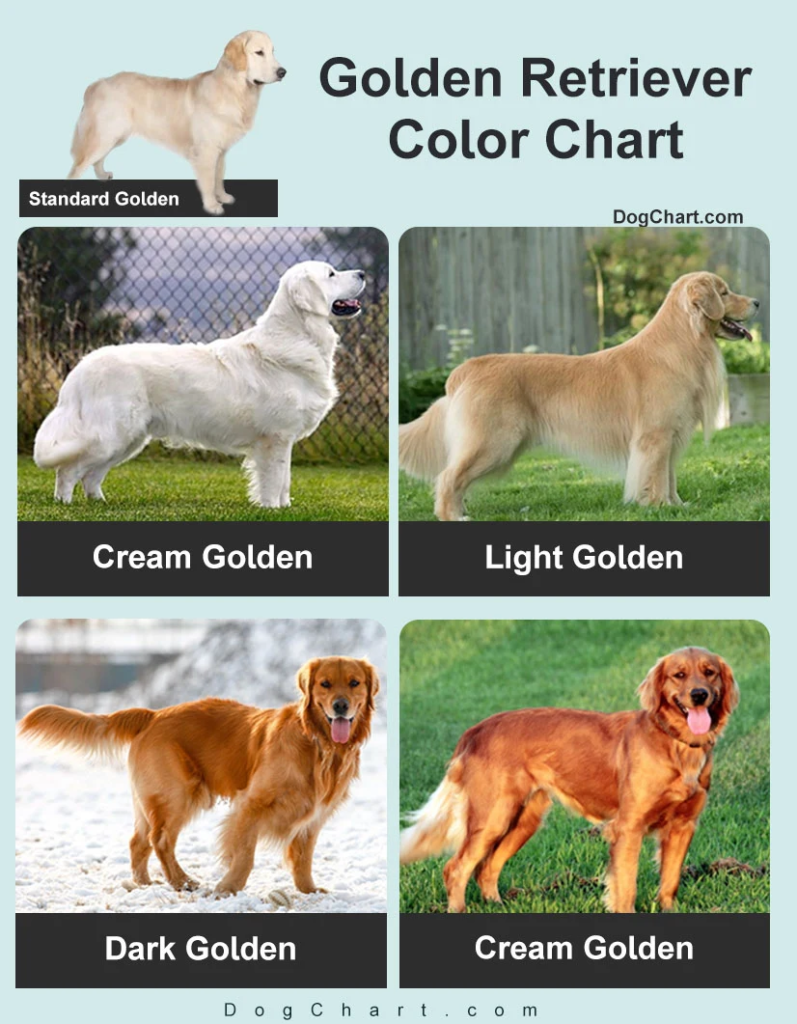
The Genetics Behind Golden Retriever Colors (The Insight Most Guides Skip)
Here’s the part most breed articles gloss over: every Golden Retriever carries the same base coat genotype, a double recessive red pattern at the extension locus, often written as e/e. In plain terms, this means every Golden Retriever’s coat only produces one type of pigment, a warm yellow-to-red pigment called phaeomelanin. There’s no separate “gold gene” and a different “cream gene.” It’s one pigment, and a handful of modifier genes simply control how much or how little of it gets expressed.
That’s why a cream Golden and a mahogany-red Golden can come from the exact same litter. It’s also why breeding two very pale parents can occasionally produce a noticeably darker puppy, since the intensity genes reshuffle with every generation rather than being fixed to a parent’s own shade. It also explains something else worth knowing: a true black Golden Retriever cannot exist as a purebred, since the breed’s genetics don’t carry the pigment needed to produce black fur. If you ever see a black “Golden,” you’re looking at a mixed breed.
The Official AKC Coat Colors
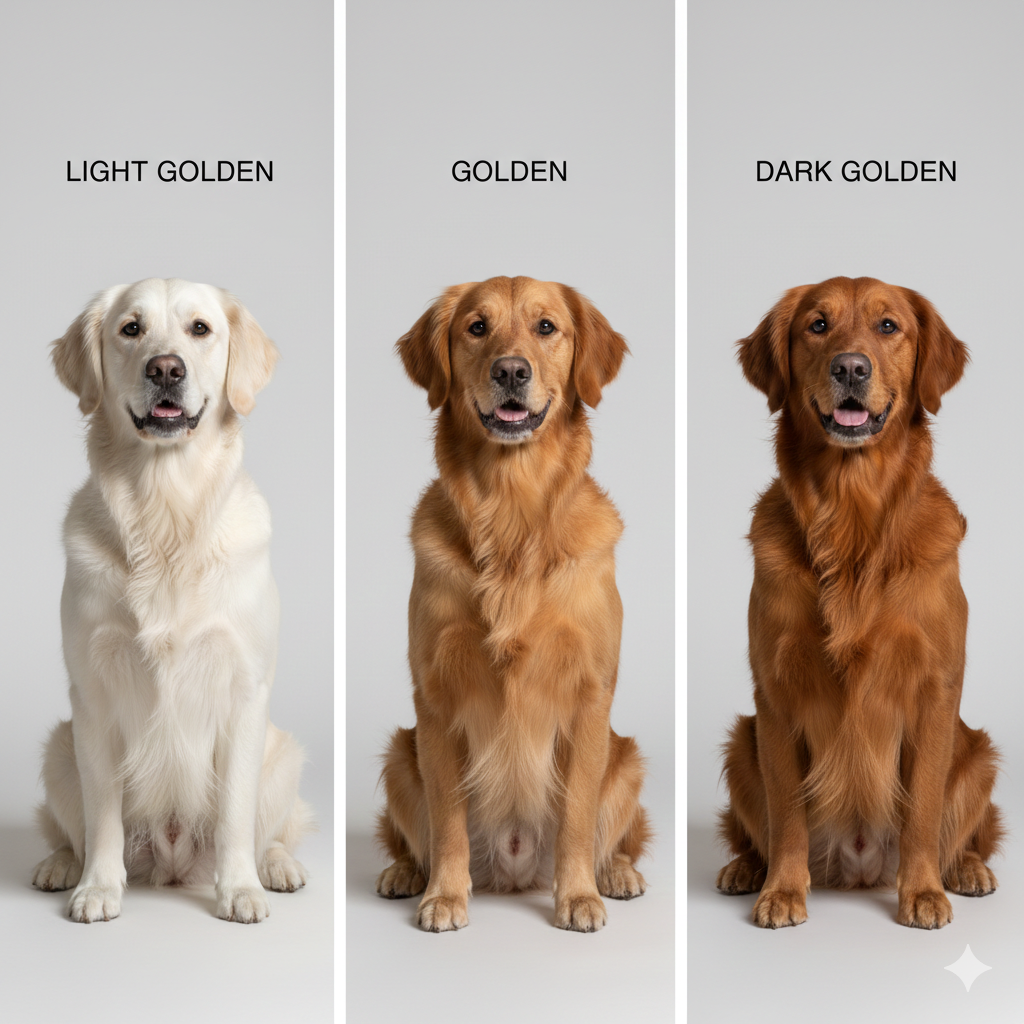
The American Kennel Club recognizes exactly three coat colors for the Golden Retriever breed standard:
- Light Golden: a pale, honey-toned shade that sits just above cream
- Golden: the classic, medium warm-gold color most people picture
- Dark Golden: a deep, rich amber shade, sometimes bordering on rust
The breed standard is fairly clear that extremes in either direction, whether nearly white or heavily red, are considered undesirable in the show ring, even though neither is a health issue. Terms like “English Cream,” “platinum,” “white,” and “red golden” are popular marketing labels, not official AKC colors. They describe the paler and darker ends of the same spectrum described above.
What About “English Cream” and “Red” Goldens?
Since these two terms come up constantly in puppy searches, they deserve a straight answer.
English Cream (or British) Goldens are simply Golden Retrievers on the palest end of the color spectrum, more common in UK and European lines, often paired with a stockier, blockier build than typical American-line Goldens. They are not a separate breed and are not officially recognized as a distinct AKC color, though some breeders market them at a premium.
Red Goldens sit at the opposite end, with a deep mahogany or fox-red coat that can resemble an Irish Setter. Canine historians generally attribute this influence to Irish Setter bloodlines that were crossed into early Golden Retriever lines in the 19th century. Red is the rarest naturally occurring shade in the breed and, like cream, isn’t an official AKC show color.
If you’re comparing a red-toned Golden to breeds it’s sometimes confused with, our Golden Retriever vs. similar breeds guide is a useful next read, since coat color is one of the biggest reasons people misidentify the breed.
Coat Type vs. Coat Color: They’re Not the Same Thing
Color gets most of the attention, but coat type, meaning the structure, density, and feathering of the fur, is arguably more relevant to daily life with the dog. Every purebred Golden Retriever has a double coat: a soft, insulating undercoat and a longer, water-resistant outer coat of guard hairs. What varies between individual dogs and lines is how thick, how long, and how heavily feathered that double coat is.
You’ll generally see three practical coat styles across the breed:
- American-line coats: medium-to-long length with moderate feathering, usually in mid-to-dark golden shades
- English/British-line coats: noticeably heavier and denser, with thick feathering on the ears, chest, legs, and tail, often on the lighter end of the color range
- Field or working-line coats: shorter, flatter, and less dramatically feathered, bred for practicality during hunting work rather than the show ring
Denser, heavier coats generally mean more grooming, more shedding volume during seasonal blowouts, and a higher chance of matting if brushing gets skipped. If you’re weighing a heavy-coated English-line Golden against a lower-maintenance field-bred dog, it’s worth factoring that into whether the breed fits your lifestyle day to day, not just how the dog looks in photos.
Does Coat Color Affect Health, Temperament, or Price?
Not health or temperament, no. Coat shade comes from cosmetic pigment genes and has no established link to a dog’s trainability, energy level, or lifespan. A cream Golden isn’t inherently calmer than a dark golden one, and a red Golden isn’t inherently more energetic. Genuine health and longevity are shaped far more by pedigree, health testing, and care than by coat color, something we cover in detail in our guide to Golden Retriever life expectancy.
Price, however, is a different story. Rarer-looking colors, particularly very pale “platinum” or “white” cream Goldens, are sometimes marketed at a premium, even though they aren’t a separate recognized variety. If a breeder is charging significantly more purely for coat color rather than health clearances and pedigree, that’s a signal worth being cautious about rather than a mark of quality.
When Does a Puppy’s Coat Reach Its Final Color?
Golden Retriever puppies are almost always born lighter than their adult coat will end up. Most dogs settle into their adult shade somewhere between 12 and 18 months old, with subtler shifts sometimes continuing for another year or two after that. One informal trick breeders use: the color of a puppy’s ears at a young age often hints at how dark the adult coat will eventually become, since the ears tend to darken earlier than the rest of the body.
If you want to see the color transformation in real time across different shades, this video is a helpful visual reference:
Choosing a Color Shouldn’t Come Before Choosing the Dog
It’s completely natural to have a color preference, plenty of owners do. But coat color is the one trait in this breed that tells you the least about how the dog will actually behave, age, or fit your household. The traits that matter more, temperament, energy level, and health, are covered in our guides on Golden Retriever temperament and the pros and cons of owning a Golden Retriever, both worth reading before color even enters the decision. And if your main reason for wanting a Golden in the first place is a family dog, our article on whether the Golden Retriever makes a good family dog is a better starting point than any color chart.
For the full picture on temperament, care, and health together, our Golden Retriever breed guide ties everything in this breed together in one place.
Frequently Asked Questions
What is the rarest Golden Retriever color? Deep red or mahogany is generally considered the rarest naturally occurring shade, since it sits at the far end of the color spectrum and isn’t the coat type most breeding programs prioritize.
Are white Golden Retrievers real? Not officially. What’s marketed as “white” is almost always an extremely pale cream, which is considered undesirable under the AKC standard rather than a distinct or rare variety.
Do darker Golden Retrievers shed more? There’s no scientific proof of this, though some owners and breeders report that darker, denser coats seem to shed more heavily during seasonal blowouts. It isn’t a confirmed rule across the breed.
The Bottom Line
Golden Retriever coat colors all come from the same underlying genetics, just expressed at different intensities. Whether you end up with a pale English Cream or a deep mahogany field-bred dog, you’re getting the same breed underneath, with the same temperament range and the same care needs. Focus on health testing, pedigree, and lifestyle fit first, and let color be the bonus it was always meant to be.
Sources :
- American Kennel Club, Golden Retriever Breed Standard
- Coats and Colors, Golden Retriever Color Genetics